
Morocco
STRENGTHENING WILDFIRE RESPONSE IN MOROCCO
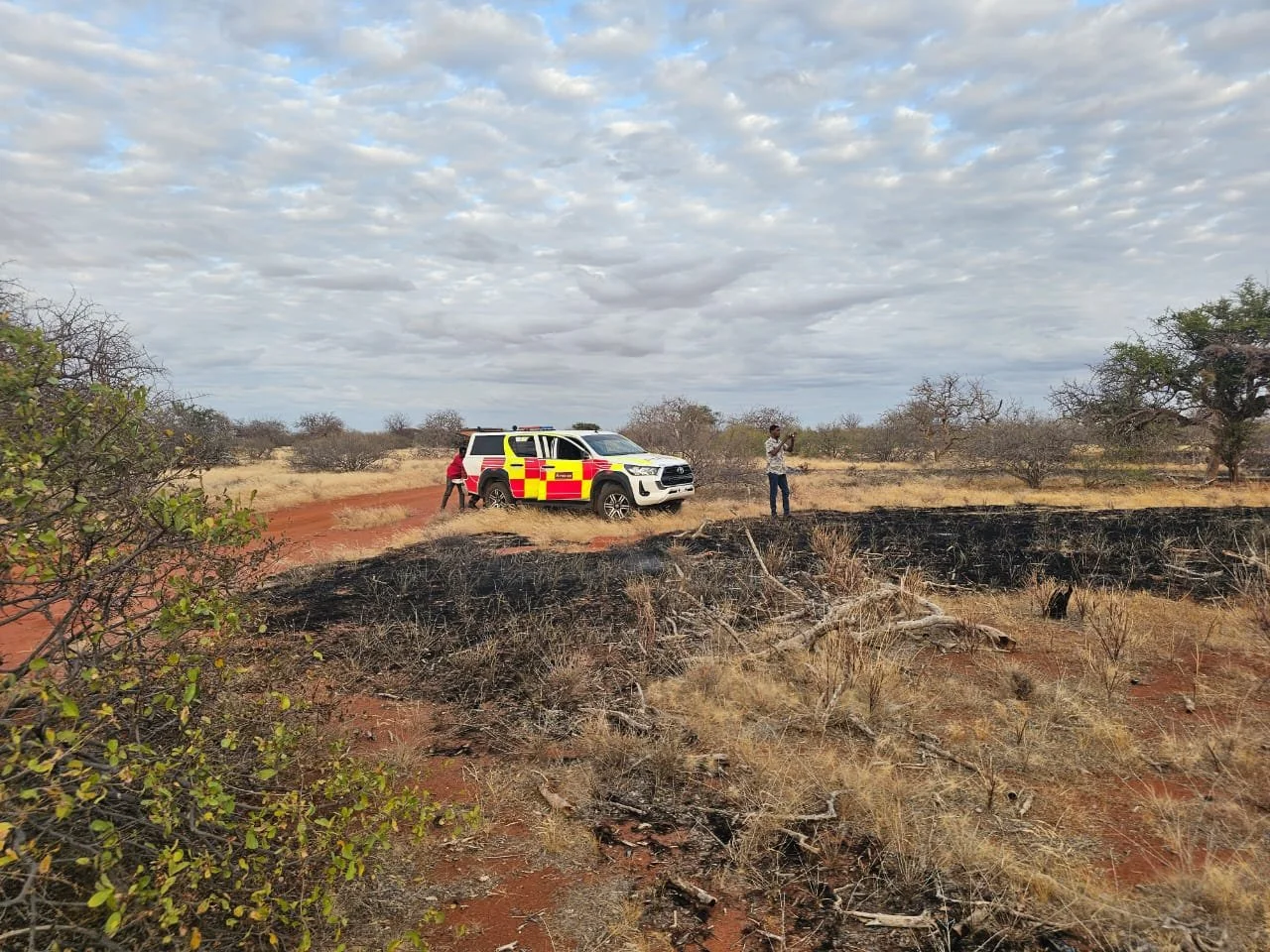
Wildfires are becoming a more serious operational challenge across North Africa. In Morocco, responding to that risk involves emergency services, foresters, military units and local volunteers working together to contain fires before they develop into larger incidents.
FIRE AID is working with Moroccan Civil Defence, Dubai Civil Defence, and international partners to strengthen that response through specialist equipment, training and professional exchange.
WILDFIRE RESPONSE DEPENDS ON REACHING FIRES EARLY
Morocco has a multi-agency system for responding to wildfires, bringing together civil defence, foresters, military units and local volunteers.
But the pressure on that system is increasing. Climate change is contributing to more frequent and severe wildfires across North Africa, making early intervention increasingly important.
The priority is to stop smaller fires becoming large-scale emergencies. That means strengthening the specialist equipment, training and coordination available to the teams responding first.
Our response
Our work with the Moroccan Civil Defence, Dubai Civil Defence, and UK partners combines specialist equipment, operational training and international cooperation. It is focused on specific gaps identified by emergency services in Morocco, with follow-up built into the programme to understand how equipment performs in practice.
SPECIALIST EQUIPMENT FOR WILDFIRE RESPONSE
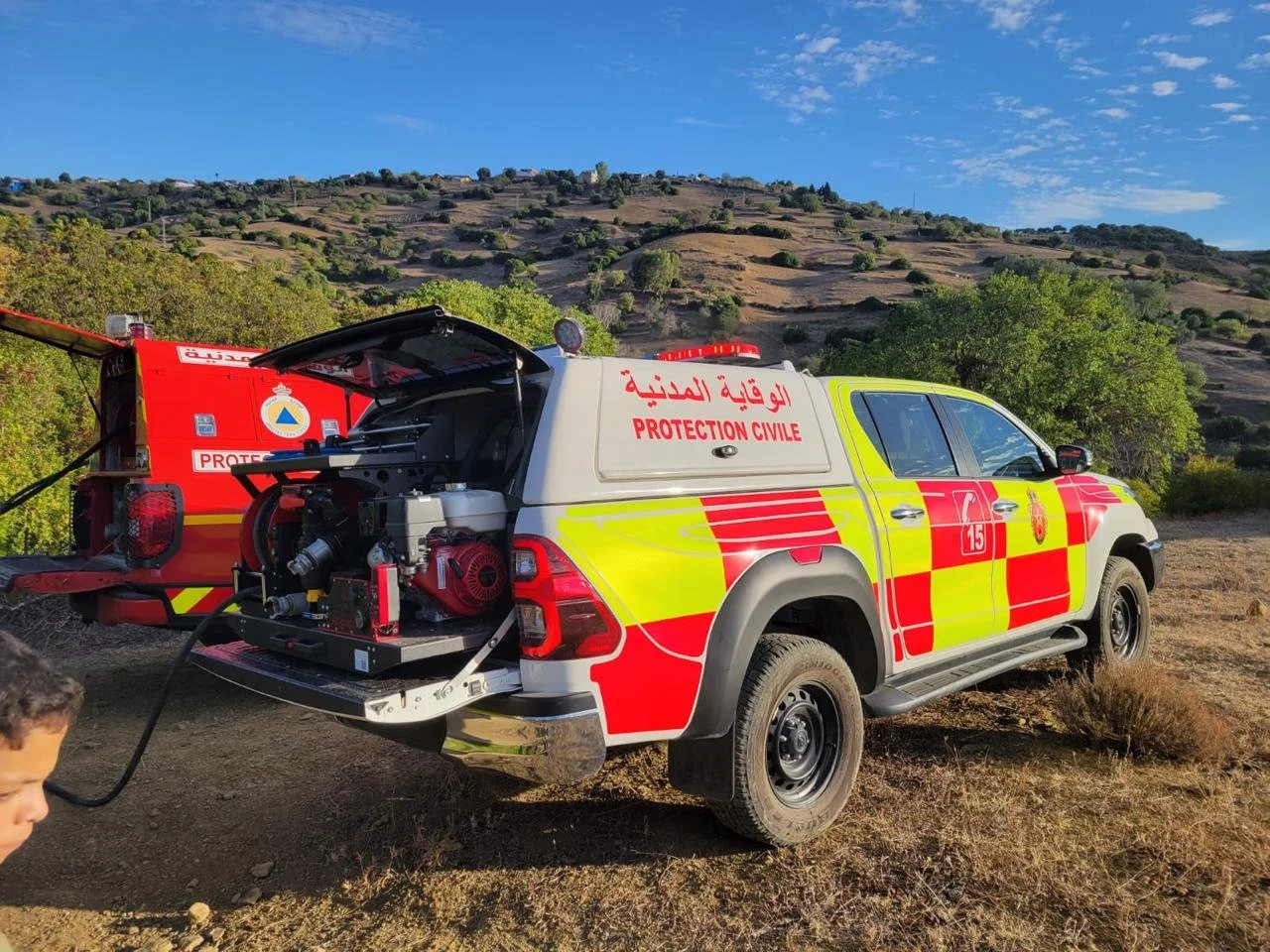
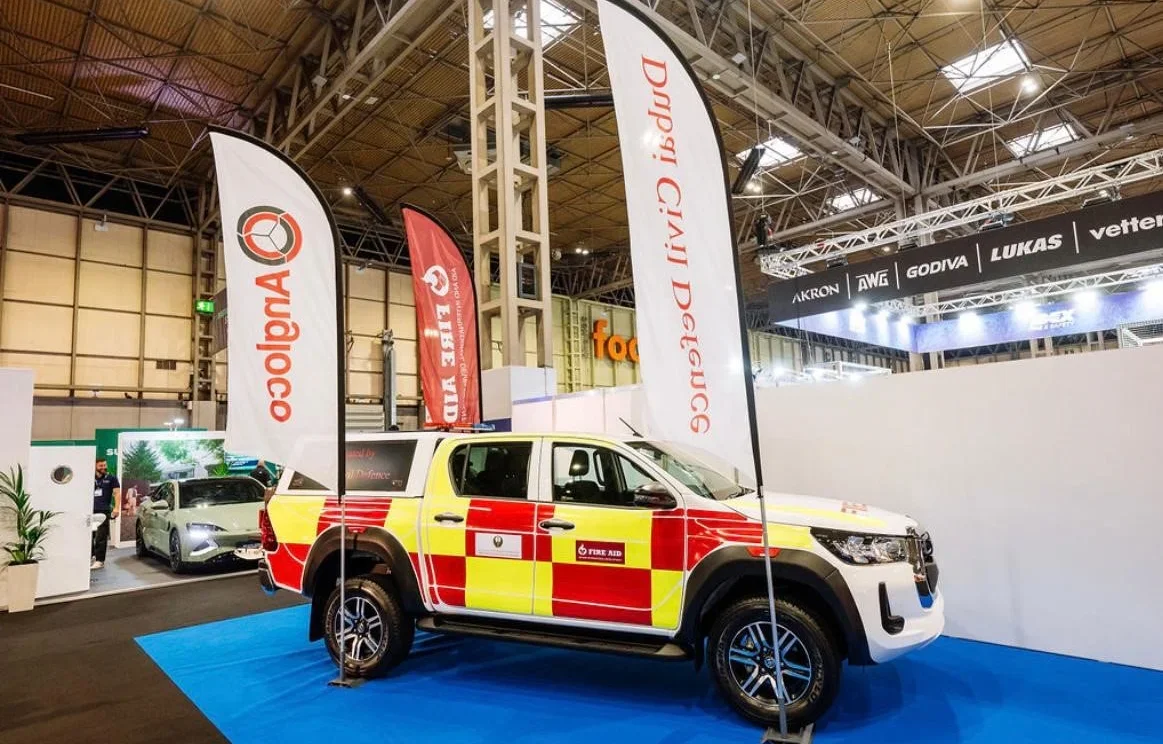
In 2025, FIRE AID brought together Dubai Civil Defence, Angloco and Moroccan Civil Protection to deliver a specialist vehicle designed for wildfire response.
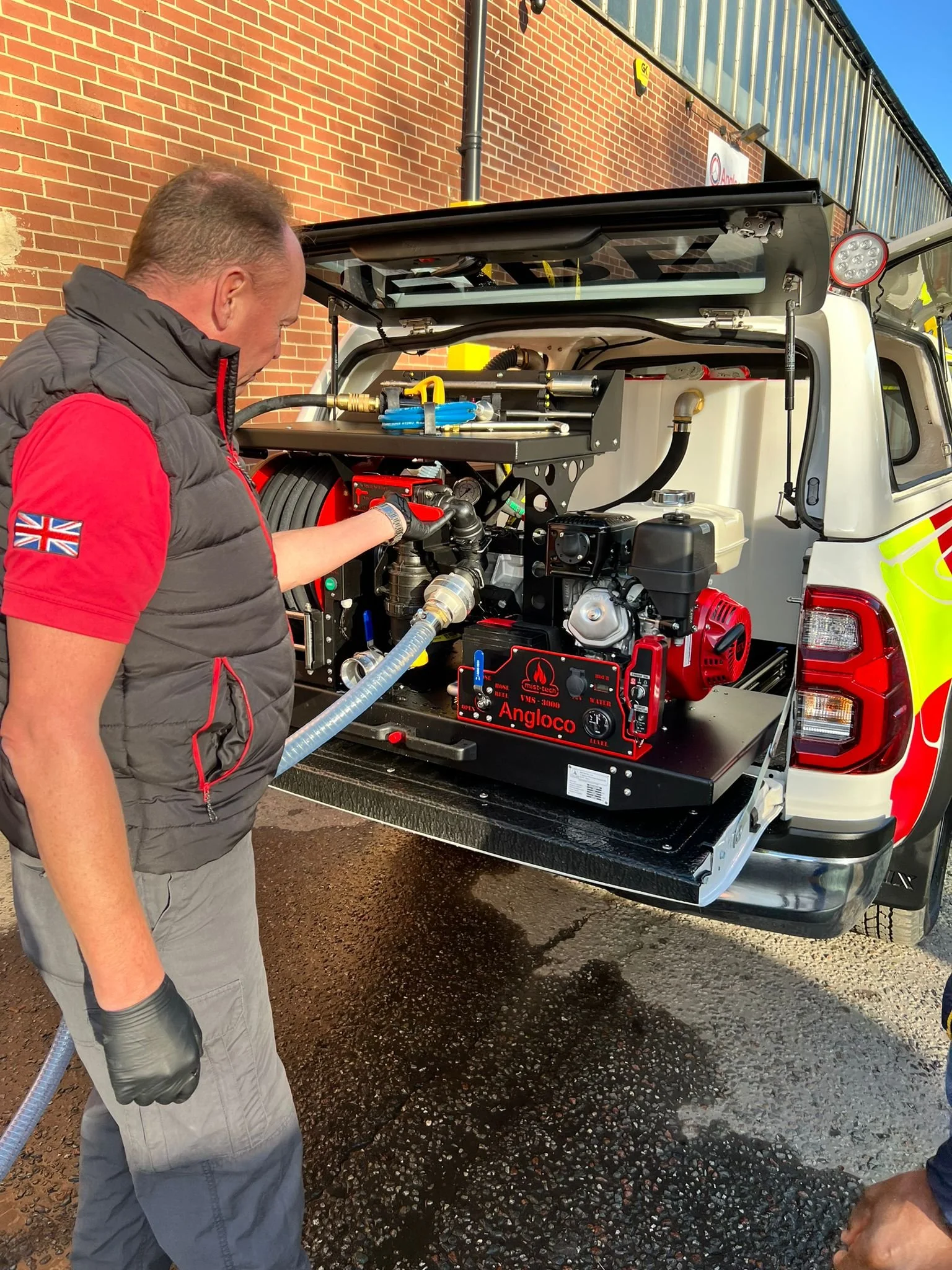
Built in the UK by Angloco, the Toyota Hilux is fitted with a light pump, integrated water tank and misting technology. It is designed to support early intervention before wildfires develop into larger incidents.
We are working with Moroccan Civil Defence to track how the vehicle is used and share operational feedback with Dubai Civil Defence. That evidence will help inform future equipment support.
STRENGTHENING POST-CRASH RESPONSE
We are working with Moroccan Civil Protection to strengthen post-crash response, including the response to fires at road collision scenes and the development of firefighter training.
Firefighters are often among the first responders to serious collisions, and the speed of the response, the equipment available and the skills of the crew can directly affect survival.
The next phase will develop opportunities for UK and Moroccan fire and rescue professionals to share operational knowledge and strengthen training in this area.
trAINING AND KNOWLEDGE EXCHANGE
FIRE AID has delivered one international training programme in Morocco, pairing specialist wildfire-response equipment with practical training for Moroccan Civil Protection.
Moroccan firefighters received hands-on training on the new wildfire response vehicle, covering the skills needed to use the equipment safely and effectively.
The programme is also developing cooperation on post-crash response, fires at road collision scenes and firefighter training, bringing Moroccan and UK fire and rescue professionals together around identified operational priorities.
PRoject timeline
12 Feb 2025
Morocco’s National Agency for Water and Forests (ANEF) and the UN Food and Agriculture Organization (FAO) host an international workshop on wildfire management in Rabat. Global experts share best practice and innovative solutions, with participants going on to visit Tangier Province to see the country’s forest restoration and wildfire mitigation work firsthand.
- Workshop hosted in Rabat
18–20 Feb 2025
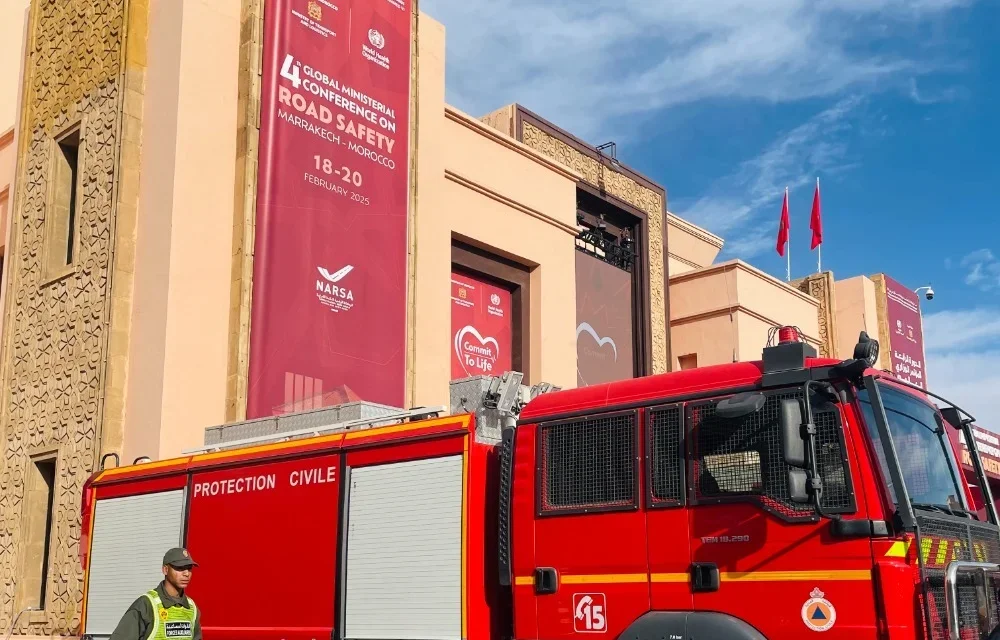
FIRE AID’s Vice Chair, Claire Hoyland, attends the 4th Global Ministerial Conference on Road Safety in Marrakech, joining sessions on post-crash response and enforcement. She meets UK Minister for Roads and Transport Lillian Greenwood and Colonel Guennon Az El Arab, Director of Aid at Moroccan Civil Protection, with the new wildfire response vehicle central to their talks.
- Global Ministerial Conference, Marrakech
2025
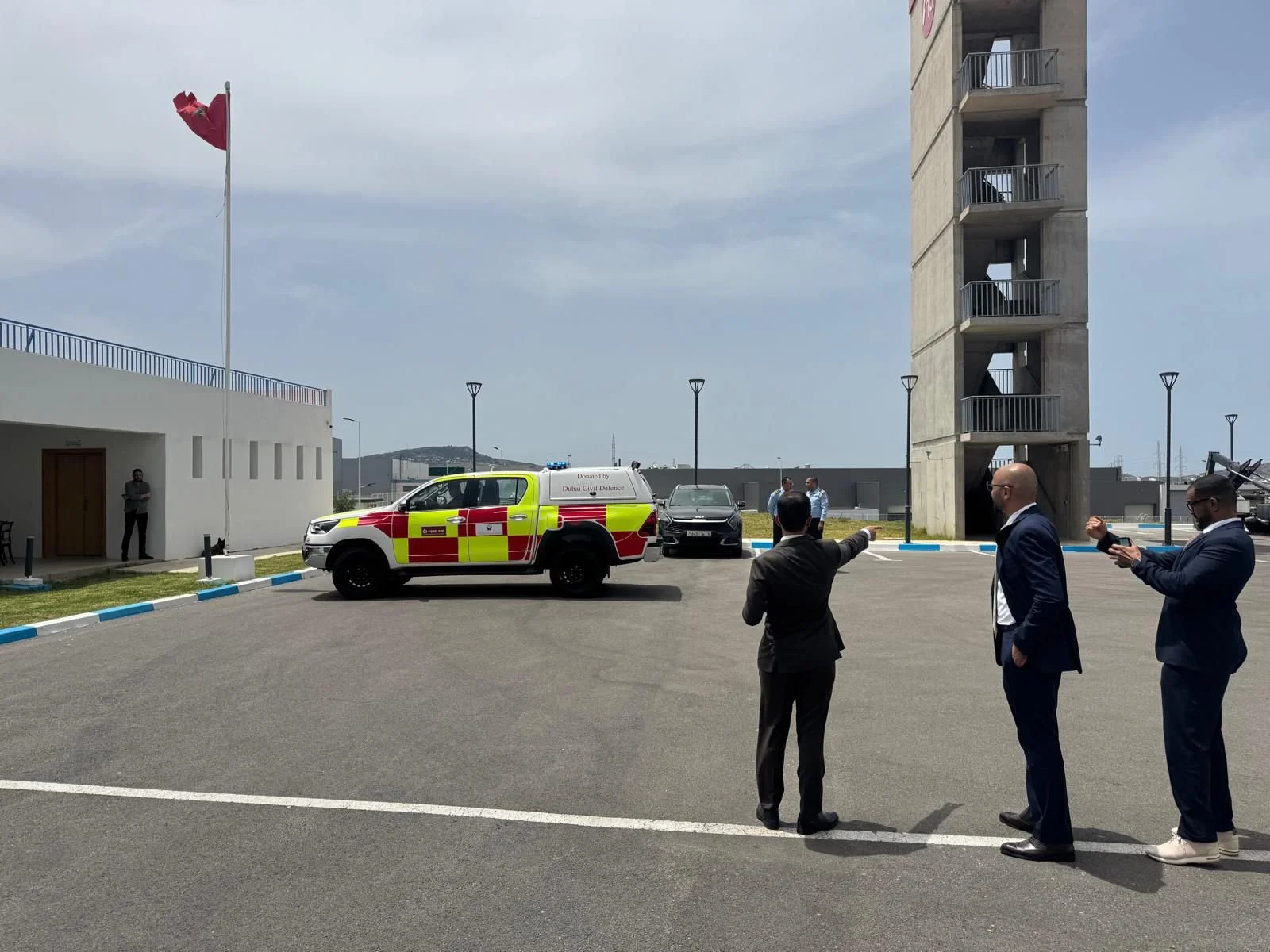
A specialised wildfire response vehicle, sponsored by Dubai Civil Defence and manufactured by UK-based Angloco Limited, arrives in Morocco. FIRE AID representatives Sam Wickett (West Midlands Fire & Rescue Service) and Nick Bankes-Fay (Devon & Somerset Fire & Rescue Service) travel to Morocco for the official handover, joined by a representative from Angloco.
- 1 wildfire response vehicle
- Built by Angloco Limited
Ongoing
In-country training for Moroccan firefighters accompanies the vehicle, alongside a roundtable exchange of expertise between FIRE AID, Moroccan Civil Protection and Dubai Civil Defence. Quarterly follow-ups track its impact, feeding performance data into Dubai Civil Defence’s fire-tracking systems.
- Quarterly impact reviews
Long-Term Impact and Technological Integration
In Morocco we are working with partners to implement a data-driven approach to wildfire response. Quarterly follow-ups will assess the vehicle’s impact, with performance data integrated into Dubai Civil Defence’s advanced fire-tracking systems. This initiative not only aims to enhance wildfire response efficiency but also contributes to global efforts in reducing emissions and improving firefighting strategies.
Through this groundbreaking collaboration, FIRE AID and Dubai Civil Defence are setting a new standard for international cooperation in wildfire management, ensuring a safer and more resilient future for communities affected by wildfires.
SUPPORT STRONGER EMERGENCY RESPONSE
Firefighters need the right equipment, training and support to respond safely and effectively. Your donation helps FIRE AID strengthen locally led fire and rescue capability where resources are most constrained.
Morocco NEWS
Become part of the story
Every FIRE AID project is built through collaboration. Whether you represent a fire and rescue service, a company or simply want to support our work, there are many ways to help strengthen fire and rescue capability around the world.
aBout the data
Figures on this page are drawn from FIRE AID operational records, project reports and visits. Data reflect the reporting period stated and equipment totals are recorded at the point of transfer.